
I like to imagine that when salamanders, lizards, flies, and other creepy crawlers scale vertical surfaces, they use imperceptible holds to maneuver. Unfortunately, that’s not the case. Instead, these animals rely on a force called friction.
This blog post—the second in our series on physics and climbing—explores two key questions: What is friction, and how does it help with climbing?
Friction: Static and Dynamic
Friction is a force that resists the motion of objects. In climbing, gravity pulls you off the wall, while friction keeps you latched on.
Before diving into how friction applies to climbing, let’s first break down its two main types: static friction and dynamic friction.
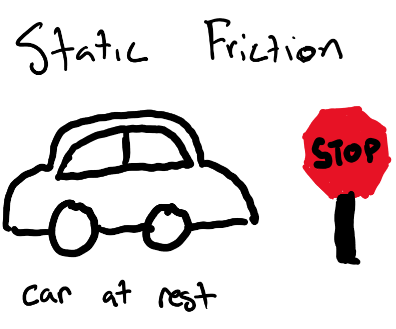
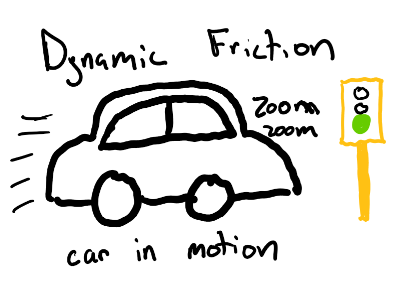
Fortunately, their definitions are self-evident. Static friction occurs between two surfaces at rest. Dynamic friction, on the other hand, occurs between surfaces when at least one is in motion.
Friction in Motion: Survivor Immunity Challenge
One of my favorite reality TV shows is Survivor. In the show, contestants face off in challenges to win immunity idols. A recurring challenge is the table maze.
In this challenge, contestants place a ball on a table maze and manipulate its orientation to roll the ball through the maze.
At the starting position, the ball and the board exhibit static friction because both are stationary. Once the player tilts the board and the ball begins to move, dynamic friction takes over. To win, contestants must master the manipulation of frictional forces.
Think you’ve got what it takes to win? Let’s take a quick ad break—sponsored by Charles-Augustin de Coulomb—before diving deeper!
A Deeper Understanding of Friction: Charles-Augustin de Coulomb
In the 1800s, Charles-Augustin de Coulomb, namesake of the unit for electrical charge (“coulomb”), expanded the laws of friction. Building on ideas from Leonardo da Vinci, Guillaume Amontons, John Theophilus Desaguliers, Leonhard Euler, and others, Coulomb gave us a more precise understanding of friction.
For our purposes, we can represent friction with the formula:
F = μN
Where:
- F = Frictional Force
- μ = Coefficient of Friction
- N = Normal Force
To maximize frictional force, we can increase either the coefficient of friction (μ) or the normal force (N).
The Coefficient of Friction
The coefficient of friction measures how “sticky” two surfaces are to each other. It’s defined as “the ratio between the force necessary to move one surface horizontally over another and the pressure between the two surfaces.”
Interestingly, coefficients of friction differ depending on whether the surfaces are at rest or in motion. For example:
| Surface | Static | Dynamic |
|---|---|---|
| Steel on steel | 0.74 | 0.57 |
| Glass on glass | 0.94 | 0.40 |
| Ice on ice | 0.10 | 0.03 |
As the table shows, materials have different stickiness levels and are generally “stickier” when stationary than when in motion.
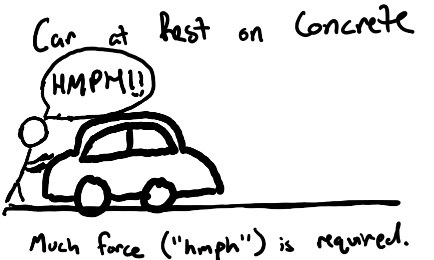
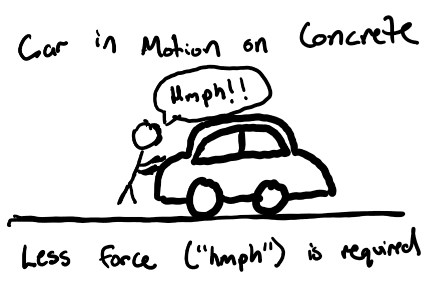
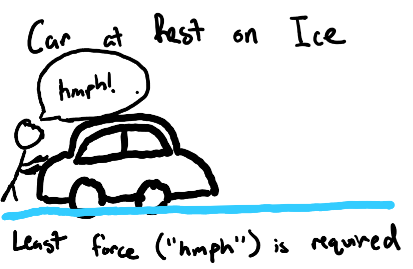
This concept aligns with experience. Imagine your car breaks down on the highway. When you first start pushing, it takes considerable effort to move the car from rest (static friction). Once the car is in motion (dynamic friction), it’s easier to keep it rolling. But, pushing a car from rest into motion on ice is easier than both.
Normal Force
The normal force is a bit more complex. It depends on variables like the object’s mass, the pressure applied, gravity, the angle between surfaces, acceleration, and movement.
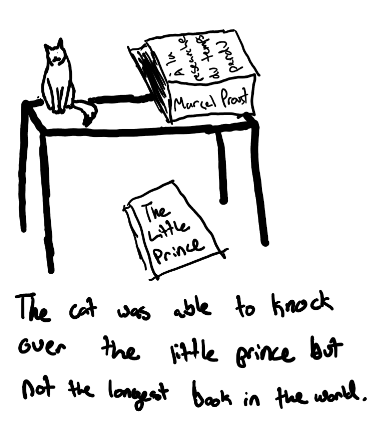
Let’s simplify. Imagine a book on a flat table. The normal force, in this case, is represented as F = mg, where m = Mass of the book and g = Acceleration due to gravity
If we increase the book’s mass, we increase the normal force, making the book harder to slide.we can only increase the friction between the book and table by changing the size of the book. This makes sense intuitively. It is harder to push an encyclopedia off the table than “The Little Prince.”
Now, let’s change another variable: the orientation of the table. As we tilt the table, the normal force decreases and we need to apply more external force to keep the book attached to the table.
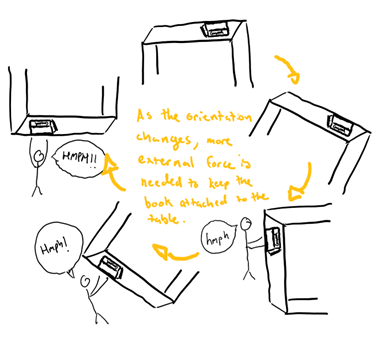
In both examples, the coefficient of friction remains constant, while the normal force changes.
Winning the Survivor Immunity Challenge
Back to Survivor! The contestants are ready to begin and place the balls at rest at the starting position, demonstrating static friction. Both the coefficient of friction and the normal force are high.
Tasha begins (2:51 in the video) by tilting the board downward to the right. The act of tilting the board reduced the normal force on the ball. And, as the ball moves, its coefficient of friction also falls. Tasha’s frictional force is running seriously low. To stop the ball, Tasha must maneuver the board quickly and orient it with a strong downward left slope to increase the frictional forces. Unfortunately, her adjustments aren’t sufficient, and the ball falls.
On her second attempt, Tasha figures it out. She sinks the ball, and each of the remaining ones to win.
Friction in Climbing
Just like in Survivor, climbers can manipulate friction to their advantage. Here are some ways to do so:
- Increase your mass over holds (e.g., on a slab, stay close to the wall to direct more force into the holds).
- Use strength to apply more force to the holds, increasing the normal force.
- Climb statically to maximize the coefficient of friction.
- Use chalk and climbing shoes to improve grip.
- Avoid sweaty hands.
- Apply directional pressure to increase the normal force on holds.
Static vs. Dynamic Climbing
In climbing, true static friction is rare because our hands and feet are always slightly moving. However, for explanatory purposes:
- Static climbing corresponds to higher static friction, requiring less normal force (i.e., strength).
- Dynamic climbing corresponds to dynamic friction, which requires more normal force.
As you first catch a hold, dynamic friction applies. But as you pause on the hold, you shift to relying on static friction. As we now know, the coefficient of friction increases and you can apply less normal force (i.e., release your grip) to have the same overall frictional force.
In their book Vertical Mind, Don McGrath and Jeff Elison explain that climbers often over grip holds, wasting energy. The principles of static and dynamic friction demonstrate how you can modulate your grip depending on how statically you are climbing. Hopefully, you can quickly apply this principle, save energy, and top more routes!
Ready to plan your next climb?
Browse qualified and vetted guides and book a session that fits your schedule.